
It can be frustrating when a fall protection system is compliant one year but not the next. There are often good reasons why this happens.
For most site operators and owners, the outcome of a fall protection system’s annual inspection is rarely something of a surprise. A properly maintained system will maintain a state of compliance from one inspection to the next.
But this is not always the case. There are many reasons why a fall protection system can find itself falling out of compliance between inspections.
For our clients, when this occurs the most pressing question is “what changed?” The answer to that question can come in many forms.
Common failures in fall protection systems
There are some reasons that the Height Safety Engineers compliance team come across regularly that result what was a compliant system now failing its inspection.
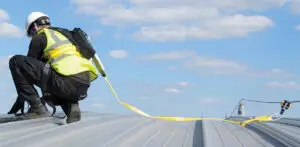
Damage to anchor points and other components would be the most common reason. The reasons for how a system can be damaged is infinite in length. Damage can occur from incorrect or careless use. Anchor points can be stood on and deformed, they can have plant or other equipment placed on them during installation or any number of other possible reasons.
Fall arrest components that have been deployed in a fall is another common reason. Although it is hoped the site would be aware that such an incident has occurred and already made good on the necessary replacement. That said, if a fall is not a serious one, or is of a type that a worker classifies as a “near miss”, then notification may not be made.
One less common reason is that fall protection systems are sometimes removed and then reinstalled. Often the reinstallation is done incorrectly. Why might a fall protection system be removed and then reinstalled? This is done for more reasons than you might think. Roofing material can be damaged and need replacing. Additional plant or equipment can be installed – solar panel systems is one that our team regularly encounters.
Other failures in fall protection systems
Apart from the physical changes that can be seen and more easily understood as a reason for non-compliance, there are also other reasons that are less obvious. Especially when it comes to newly constructed buildings that are undergoing their first compliance inspection.
When a building is under construction, there can be a difference in focus between what the builder is looking for in terms of fall protection and what the operator or owner is going to need once the building becomes operation and regular maintenance tasks are being performed.
The nature of the construction industry is that businesses within it operate on small margin percentages and look to create savings where they can. Although a fall protection system may be required to be delivered as part of a building, what that system can look like may be open to interpretation.
A portable ladder bracket, single anchor point and first-man up (strop) cable may be enough for the system to receive a compliance certificate. A worker, using that system, can safely access the roof area. However, if they need to go near an edge for gutter cleaning then the system is not fit for purpose.
Even after construction, building upgrades can affect the compliance of a fall protection system. Installation of new plant could mean that access is required to new areas beyond the scope of an existing fall protection system.
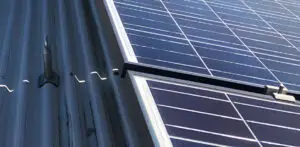
Solar panel installations are an incredibly common source of issues for fall protection systems. Panels are commonly installed over the top of roof anchors, making them inaccessible. They can also be installed right up to roof edges, which removes the ability for workers to safely access the panel for maintenance work.
How to maintain fall protection system compliance
As a building owner or operator, being an active participant when it comes to working at height and fall protection is key.
Many of the reasons that fall protection systems fall out of compliance is because they are often out of sight and out of mind. All too often attention is only paid to them after the accident, which is too late.
From building design through to construction and ongoing use, the need to be across the details of what working at height is going to be undertaken, where and how often is vital. Only then can systems be put in place to protect people undertaking that work.
When a building is being designed, it is important that a compliant, and fit for purpose fall protection system be specified. Consideration needs to be given to what work is likely to need doing once the construction has finished.
The same thinking applies for existing buildings where renovations, modifications or additional plant is going to be installed. An existing system will need to be reviewed and potentially updated as part of that process. Failing to have that as part of the project is likely to render the system non-compliant at its next inspection.
Fall protection systems that are not compliant are systems that are not protecting people. Falls from height remains one of the most frequent causes of workplace injury and fatalities.
Partners in protecting people
Height Safety Engineers are the experts in designing, installing and maintaining your building’s fall protection system.
Our team bring decades of real-world fall protection and height safety experience to every job. No matter your needs or working environment, we can help.
Start your safety journey today by calling 1300 884 978, emailing enquiries@heightsafety.net or by dropping us a line.